
What Happens When You Leave the Shore
Sep 16, 2026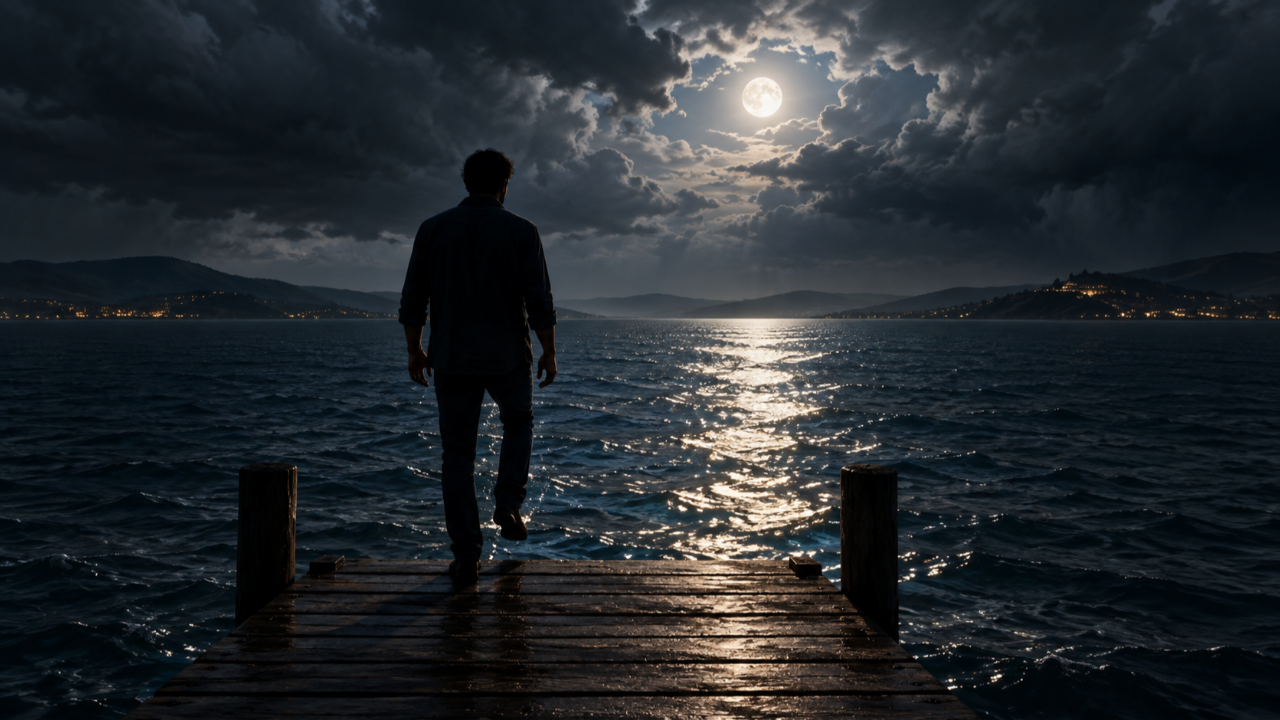
There's a moment in Matthew 14 that most of us skip past too quickly.
We love the part where Peter walks on water. We remember the part where he sinks. But there's a detail before any of that happens that changes the whole story.
Jesus told his disciples to get into the boat.
And they didn't want to go.
They Knew a Storm Was Coming
Matthew 14:22 (NKJV) says, "Immediately Jesus made His disciples get into the boat and go before Him to the other side."
That word "made" (other translations say "constrained" or "compelled") tells you something was off. These weren't reluctant passengers for no reason. At least four of them were fishermen. They had worked this lake their whole lives. Mount Hermon sat just north and west of the Sea of Galilee, and weather would roll over that ridge and drop fast.
They could read the signs. A storm was forming, and Jesus was telling them to sail straight into it at nightfall.
Every piece of natural wisdom they had said, "Don't get in that boat." And Jesus said, "Get in."
The Miracle Requires the Boat
This is where it gets personal.
Most of us want the miracle, but we want it from the safety of the shore. We want Peter's water-walking moment, but we want to skip the part where he had to climb out of a boat in the middle of a storm in the dark.
Andrew Wommack teaches that if you want to see the miraculous power of God, you have to leave the safety of the shore. You have to head in the direction God told you to go, even when it runs against everything your natural mind is telling you.
That's uncomfortable. It's supposed to be.
Because the miracle doesn't happen on the dock. It happens in the deep water, in the dark, with waves crashing over the side of a boat you didn't want to be in.
They Had Everything They Needed
Here's what makes this even more striking. Earlier that same day, these same disciples watched Jesus take five loaves and two fish and feed over 5,000 people. Twelve baskets of leftovers. Less than 24 hours before the storm, they witnessed a miracle that proved Jesus had authority over every natural law.
Mark 6:52 (NKJV) puts it plainly: "For they had not understood about the loaves, because their heart was hardened."
They saw the multiplication. They handed out the bread. They collected the leftovers. And when the storm hit that night, they panicked anyway.
Not because the miracle didn't happen. Because they didn't let it change them.
The miracle of the loaves should have settled something in their hearts. It should have made them think, "He just multiplied bread. Water isn't going to stop Him." Instead, they were "greatly amazed in themselves beyond measure" (Mark 6:51, NKJV) when Jesus walked across the lake to them. They were shocked by something that should have felt like the most natural next step.
One Word Was All Peter Needed
When Jesus came walking toward the boat, the disciples thought they were seeing a ghost. They screamed. Fear took over. And then Jesus said the thing He always says when people are afraid:
"Be of good cheer! It is I; do not be afraid." (Matthew 14:27, NKJV)
And Peter, out of everyone in that boat, did something no one else had the faith to do. He said, "Lord, if it is You, command me to come to You on the water." (Matthew 14:28, NKJV)
He didn't ask for a guarantee. He didn't ask for calm seas first. He asked for a word. One word from Jesus. That was all he needed.
And Jesus said, "Come."
Peter climbed out of the boat and walked on water. The same water that was tossing the boat. The same storm that terrified the other eleven. Peter walked on it. Not because the circumstances changed, but because he had a word from God and he acted on it.
He Sank, and Jesus Caught Him
Yes, Peter took his eyes off Jesus. Yes, he saw the wind, and he was afraid, and he started to sink. We know this part.
But look at what Jesus did. "Immediately Jesus stretched out His hand and caught him." (Matthew 14:31, NKJV)
Immediately. Not eventually. Not after Peter learned his lesson. Not after he got himself together. Jesus reached for him the moment he started going under.
And then Jesus asked him a question that was gentler than it sounds: "O you of little faith, why did you doubt?" (Matthew 14:31, NKJV)
He didn't say "no faith." He said "little faith." Peter had enough faith to get out of the boat. He had enough faith to walk on water. He just didn't have enough to keep walking when the wind picked up.
And even then, Jesus didn't let him drown.
Your Boat, Your Storm
So where is this for you?
Maybe God has told you to do something that doesn't make sense. Something that goes against your natural reasoning. Something that everyone around you would call risky or unwise. Maybe you've been standing on the shore, waiting for the storm to pass before you step out.
The disciples had a word from God. Jesus told them to go to the other side. Not halfway across and drown. The other side. That word was enough to carry them through the storm. It was enough for Peter to walk on water. And it would have been enough for all of them, if they had let the miracle of the loaves settle deeper in their hearts.
Proverbs 3:5-6 (NKJV) says, "Trust in the Lord with all your heart, and lean not on your own understanding; in all your ways acknowledge Him, and He shall direct your paths."
You don't need to see the whole crossing. You need a word from God and the willingness to get in the boat. The miracle is on the other side. But you have to leave the shore to get there.
This post draws from How to Be a Water Walker by Andrew Wommack. Watch the full teaching series on YouTube.
Discover Your Calling
Andrew Wommack is hosting a free 4-day Masterclass to help you find clarity, direction, and confidence in what God has for your life.